If your back feels “stuck,” your glutes feel tight after sitting, and your calves feel like they’re permanently on alert, you don’t need the most painful tool—you need the right tool for the tissue and the spot.
In real life, the best recovery method is the one that gives you relief without leaving you bruised and that you’ll actually use consistently.
Disclosure: Some links may be affiliate links. As an Amazon Associate I earn from qualifying purchases.
Quick answer (best tool by body area)
Tight back:
- ✅ Best overall: Foam roller (mid/upper back) + lacrosse ball (upper back/shoulder blade edges)
- ⚠️ Massage gun: good for muscles around the spine, not directly on it
Tight glutes:
- ✅ Best overall: Lacrosse ball (pinpoint knots)
- Great add-on: Massage gun for quick, less “painful” relief
- Foam roller: good for broad glute soreness, less precise
Tight calves:
- ✅ Best overall: Massage gun (fast, easy, consistent)
- Foam roller: very effective but can feel intense
- Lacrosse ball: great for small trigger points near the Achilles (use carefully)
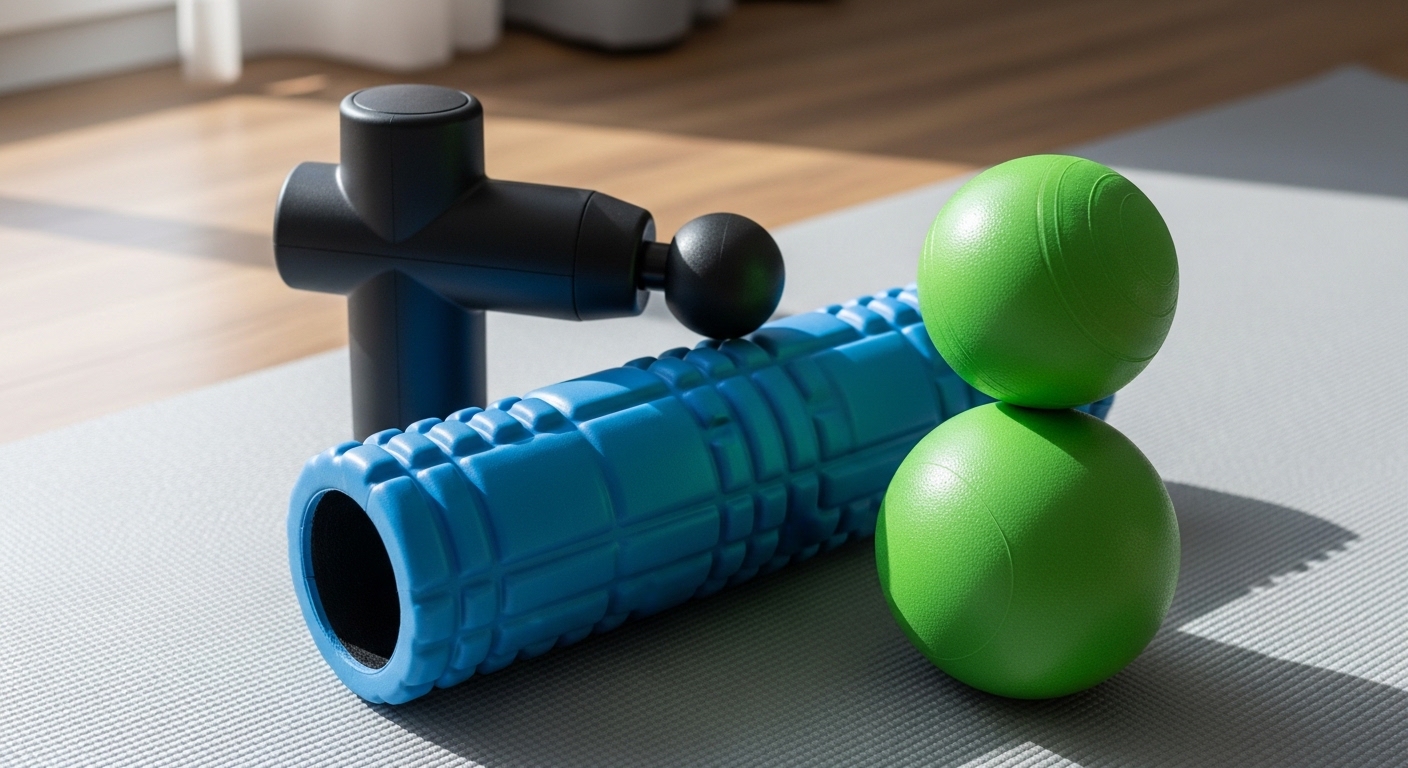
Best “one tool” for most people: Massage gun
Best “best value + total coverage” combo: Foam roller + lacrosse ball
How each tool actually works (and what it’s best at)
1) Massage Gun (percussion therapy)
What it’s best at: quick relief, easy routine, less setup.
Pros
- Fast: you can get benefits in 2–5 minutes
- Great for calves and glutes because you can control pressure easily
- Good if you hate floor work or don’t have space
- Often feels effective without requiring you to “suffer”
Cons
- Not ideal over bones, joints, or directly on the spine
- Easy to overdo it (too hard, too long)
- Can irritate sensitive areas if you press aggressively
Best for
- Calves that feel tight daily
- Glute soreness and “deep ache” after sitting or training
- People who want a tool they’ll use consistently
Avoid
- Directly on spinal bones, lower back spine line, front/side of neck
2) Foam Roller (broad pressure / myofascial release style)
What it’s best at: large areas, “general tightness,” improving how you move.
Pros
- Excellent for big muscle groups: glutes, calves, upper back
- Can help you feel “looser” overall (especially after long sitting)
- Cheap, durable, no charging
Cons
- Harder to target pinpoint knots
- Can feel too intense (especially IT band/calf area)
- Requires floor space and a bit of technique
Best for
- Upper/mid back tightness (thoracic area)
- Broad glute and calf tightness
- People who like doing a short mobility routine
Avoid / be careful
- Rolling aggressively on the lower back (lumbar spine)
- Rolling directly on joints or bony areas
3) Lacrosse Ball (pinpoint trigger point tool)
What it’s best at: the “one spot” that ruins your day.
Pros
- Most precise: hits tight points in glutes, piriformis area, shoulder blade edges
- Cheap and portable
- Great for stubborn knots that rollers can’t reach
Cons
- Can be intense quickly—easy to irritate tissue if you grind on it
- Takes patience and control (breathing, small movements)
- Not as great for large, broad soreness
Best for
- Deep glute knots (especially from sitting)
- Upper back tight points near shoulder blades
- Specific calf trigger points (use gently)
Avoid
- Pressing hard on nerves (sharp, tingling pain = stop)
- Direct pressure behind the knee or on Achilles tendon
Best tool by body area (real-life recommendations)
Tight Back (especially desk back)
Best overall approach: Foam roller + lacrosse ball
- Foam roller: great for mid/upper back tightness and posture stiffness
- Do slow rolls in the mid-back (not lower back) + gentle extensions.
- Lacrosse ball: best for the “hot spots” around shoulder blades and upper back
- Use it against a wall for control.
- Massage gun: use on the muscles beside the spine (erectors) and lats—never on the spine itself.
Winner for back: Foam roller (for general tightness) + lacrosse ball (for pinpoint)
Tight Glutes (from sitting, workouts, or running)
Best overall tool: Lacrosse ball
- If you can point to one painful knot: ball wins—hands down.
- If you want easier, less intense relief: massage gun is more comfortable and still effective.
- Foam roller is great when your whole glute area feels sore, but it’s not as precise.
Winner for glutes: Lacrosse ball (most targeted)
Tight Calves (cramping, heavy legs, plantar tension)
Best overall tool: Massage gun
- Calves respond well to quick percussion because they’re often tight and overworked.
- Foam rolling is extremely effective but can be brutal if you’re sensitive.
- Lacrosse ball is for small trigger points near the lower calf (go carefully).
Winner for calves: Massage gun (most user-friendly and consistent)
The “best choice” depends on what you want
If you want the easiest method you’ll actually stick with
✅ Massage gun
Best for daily maintenance, especially calves and glutes.
If you want the best results for the least money
✅ Foam roller + lacrosse ball
This combo covers broad tightness + pinpoint knots better than any single tool.
If you have one specific “knot from hell”
✅ Lacrosse ball
Use it gently and patiently (more on that below).
How to use each one without making it worse
Massage gun routine (5 minutes)
- Calves: 45–60 sec each side (avoid Achilles and shin bone)
- Glutes: 60–90 sec each side (don’t press directly on hip bone)
- Back: 30–45 sec on lats + muscles beside spine (not the spine)
Rule: if it feels sharp, tingly, or numbing → stop and reposition.
Foam roller routine (6–8 minutes)
- Upper/mid back: slow roll + pause on tight areas (no lower back rolling)
- Glutes: sit on roller, cross ankle over knee, roll slowly
- Calves: roll from ankle to below knee, rotate foot in/out
Rule: mild discomfort is okay; pain that makes you tense up is counterproductive.
Lacrosse ball routine (3–6 minutes)
- Use wall first (easier to control), then floor if needed
- Find a tight spot and hold pressure 20–30 seconds, breathe slowly
- Add tiny movements, not aggressive grinding
- Move 1–2 inches and repeat
Rule: pressure should feel “productive,” not like you’re getting stabbed.
Common mistakes (why you’re not getting relief)
- Going too hard too fast (your body tightens to protect itself)
- Rolling the lower back aggressively instead of hips/glutes
- Smashing calves without stretching ankle range afterward
- Using a lacrosse ball like a torture device (hold + breathe works better)
Bottom line: What works best?
- Back: foam roller (general) + lacrosse ball (targeted)
- Glutes: lacrosse ball for knots, massage gun for easy daily relief
- Calves: massage gun for consistency, foam roller for deeper work