Bleeding gums and tight teeth are a frustrating combo: floss snaps, brushes won’t fit, and you’re left wondering if you’re making things worse. The good news: bleeding is usually a sign of inflammation + plaque, not that flossing is “bad.” The best tool is the one you can use correctly and consistently—without forcing it.
Disclosure: Some links may be affiliate links. As an Amazon Associate I earn from qualifying purchases.
Quick answer (what most people should do)
- Tight contacts (teeth very close together): start with string floss (or floss picks), and consider a water flosser as a helpful add-on.
- Bleeding gums: any of the three can help, but the best results usually come from string floss OR interdental brushes (if they fit) plus gentle technique and consistency.
- If interdental brushes don’t fit easily: don’t force them—use string floss + water flosser instead.
Best overall for “bleeding + tight teeth” (most people):
✅ String floss (for tight contacts) + water flosser (for gumline flushing and consistency)
Why gums bleed when you floss (and when to worry)
Most of the time, bleeding means gum inflammation (gingivitis) from plaque sitting along the gumline. When you start cleaning better, gums may bleed for a few days to a couple weeks—then improve.
Red flags—get dental advice ASAP if you have:
- Bleeding that doesn’t improve after ~2 weeks of daily cleaning
- Swelling, pus, bad taste, loose teeth, significant pain
- You’re pregnant, diabetic, or on blood thinners (bleeding can be worse)
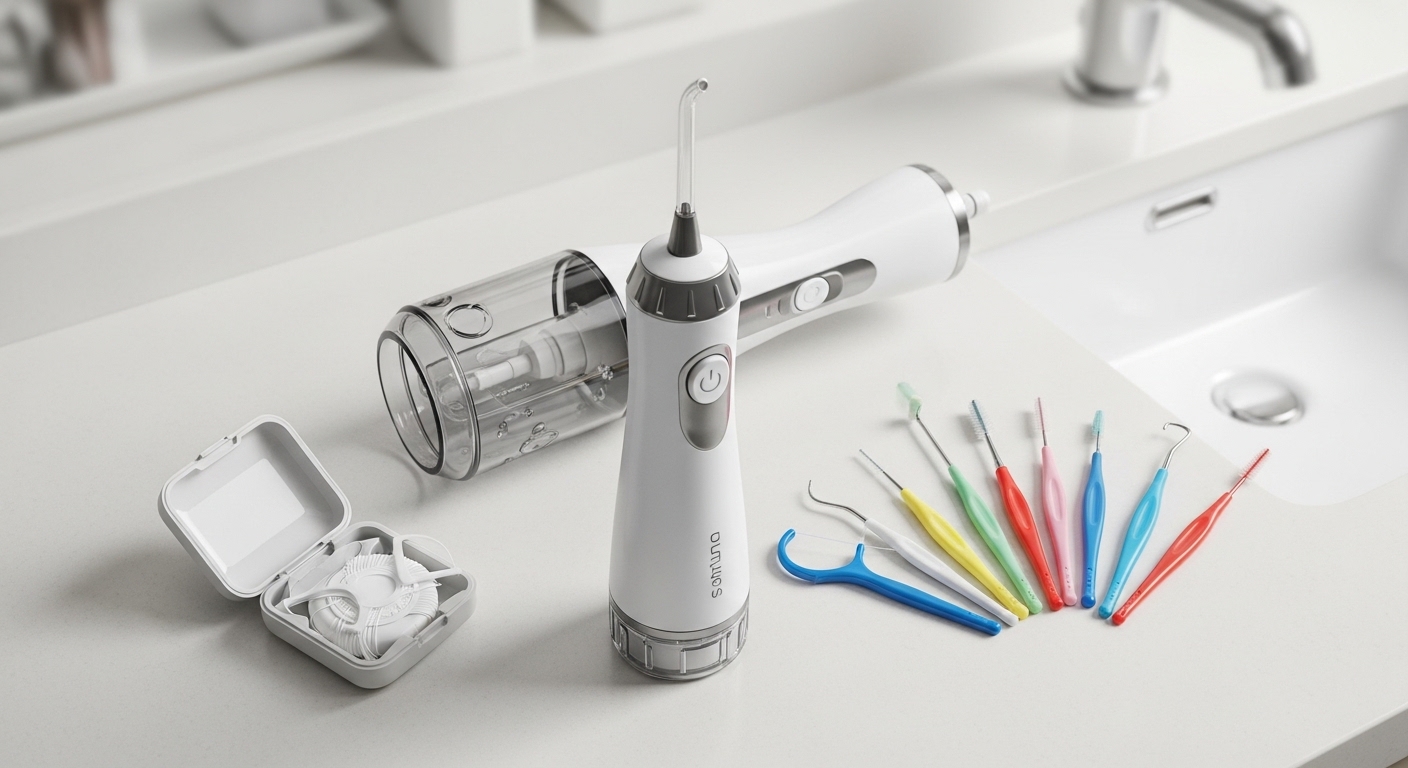
1) Water Flosser (Oral Irrigator)
What it does best
A water flosser uses a pressurized stream to flush along the gumline and between teeth. It’s excellent for:
- Bleeding gums (especially when flossing hurts or feels too aggressive)
- People with braces, bridges, implants
- Anyone who struggles to floss consistently
Pros
- Gentler on sore/bleeding gums when used on a low setting
- Great at cleaning around brackets, crowns, implants, bridges
- Often increases consistency (it feels easier → you do it more)
- Helpful for people with limited dexterity
Cons
- Can miss plaque that’s stuck tightly between teeth (especially with very tight contacts)
- Messier and needs charging/counter space (depending on model)
- If used too hard or aimed incorrectly, can irritate gums
Best for
- Bleeding gums when you need a gentle start
- Braces/dental work
- People who hate floss but want something they’ll actually use
Pro tip for bleeding gums: start on lowest pressure, aim at a 90° angle to the gumline, and trace slowly.
2) String Floss (Traditional Floss)
What it does best
String floss is the king for tight teeth because it physically scrapes plaque off the tooth surfaces where brushes and water can struggle.
Pros
- Best for tight contacts (where nothing else fits well)
- Removes plaque by mechanical scraping
- Cheap, portable, no charging, no setup
Cons
- Technique-sensitive (most people do it wrong at first)
- Can “snap” and irritate gums if you force it
- Harder for people with braces, bridges, or poor dexterity
Best for
- Tight teeth
- People who want the most direct plaque removal between teeth
- Anyone willing to learn proper technique (it’s quick once you get it)
Technique that reduces bleeding:
Slide gently, hug the tooth in a “C” shape, move up/down 5–10 times, then switch to the next tooth surface. Don’t saw hard into the gums.
3) Interdental Brushes (Tiny Brushes Between Teeth)
What they do best
Interdental brushes are often the most effective option when they fit properly, especially for:
- Wider gaps
- Gum recession
- Larger interdental spaces
- Around bridges and implants
Pros
- Extremely effective at removing plaque in spaces they can reach
- Often easier than floss for many people
- Great for gum recession and larger gaps
- Quick and satisfying (you can feel it cleaning)
Cons
- Often won’t fit tight teeth without forcing (don’t force)
- Wrong size can hurt or damage gums
- You may need multiple sizes for different areas
Best for
- People with spaces, recession, or periodontal history
- Cleaning around dental work
- Anyone who finds floss difficult but has enough space for brushes
Sizing rule: it should slide in with light resistance—never painful, never forced.
Head-to-head comparison (simple and practical)
For bleeding gums
Best starter: Water flosser (gentle)
Best if it fits: Interdental brush (very effective)
Best for tight contacts: String floss (but use gentle technique)
For tight teeth
Best: String floss
Usually not ideal: Interdental brushes (often won’t fit)
Helpful add-on: Water flosser (good for gumline, not always enough alone)
For consistency (actually sticking with it)
Often easiest: Water flosser or interdental brushes
Most technique-dependent: String floss
For braces/implants/bridges
Best: Water flosser + interdental brushes (where appropriate)
Harder: String floss (unless you use threaders/special floss)
So… which one is optimal for you?
If you have bleeding gums + tight teeth (most common scenario)
✅ Best overall routine
- String floss once daily (gentle “C-shape,” no snapping)
- Water flosser once daily or a few times/week (low pressure, along gumline)
Why this works: floss handles the tight contact plaque; water helps flush the gumline and makes the routine easier to maintain.
If your gums bleed and you also have visible gaps or recession
✅ Best overall routine
- Interdental brushes (correct size) for the spaces that fit
- String floss for the tight contacts that brushes can’t enter
- Optional water flosser if you have braces/dental work or struggle with consistency
If flossing hurts and makes you quit
✅ Best “don’t give up” routine
- Start with a water flosser on low pressure daily for 2 weeks
- Then add string floss 3–4x/week, gradually moving to daily if tolerated
Consistency beats perfection.
Common mistakes that keep gums bleeding
- Floss snapping straight down into gums (use a gentle slide)
- Using high pressure immediately with a water flosser
- Picking an interdental brush too big and forcing it
- Only flossing “sometimes” (inflammation doesn’t calm down with random cleaning)
Best practice routine (simple)
- Brush 2x/day with a soft brush
- Clean between teeth once daily (choose your tool)
- If bleeding is present: commit to 14 days consistently before judging
Bottom line
- Tight teeth: string floss wins.
- Bleeding gums: all can help, but the best approach is the one you’ll do daily—often floss + water flosser is the most realistic “optimal” combo.
- Interdental brushes are amazing only if they fit without force.